STCW Course : Girik Maritime Academy for a Successful Maritime Career

Starting a career at sea is an exciting goal for many aspiring Indian seafarers. Life on a ship offers opportunities to travel, learn, develop technical skills, and build a professional career in the global maritime industry. However, working on board also comes with responsibilities where safety, discipline, teamwork, and emergency preparedness are extremely important.
This is where an STCW Course becomes an essential part of maritime training. STCW training helps seafarers understand the basic safety practices, emergency procedures, personal responsibilities, and practical skills required while working on board a vessel.
Girik Maritime Academy is dedicated to supporting Indian seafarers through professional maritime training. The academy provides DG Shipping-approved STCW courses designed to develop practical knowledge, confidence, and safety awareness for the maritime profession.
What Is an STCW Course?
STCW stands for Standards of Training, Certification and Watchkeeping for Seafarers. The STCW framework establishes international standards for the training, certification, and watchkeeping of seafarers.
For someone planning to enter the merchant navy or continue a maritime career, appropriate STCW training provides important knowledge related to shipboard safety and emergency situations.
The training focuses not only on theoretical information but also on understanding how a seafarer should respond when faced with real situations at sea. This makes practical learning an important part of maritime education.
Why Is STCW Training Important for Seafarers?
Working on a vessel requires more than technical knowledge. A seafarer must be able to respond appropriately to emergencies, communicate effectively with other crew members, understand safety procedures, and contribute to safe ship operations.
An STCW Course helps learners develop awareness in areas such as:
- Personal survival and emergency preparedness
- Fire prevention and firefighting
- Basic first aid
- Personal safety
- Social responsibilities on board
- Emergency response procedures
- Safe working practices
- Effective communication
- Prevention of marine pollution
For new seafarers, learning these fundamentals can make the transition from classroom training to a shipboard environment easier and more structured.
Learn Practical Maritime Skills at Girik Maritime Academy
At Girik Maritime Academy, maritime training is designed with the needs of seafarers in mind. The academy believes that properly trained ship staff play an important role in maintaining safe, efficient, and responsible vessel operations.
Instead of focusing only on classroom theory, training can include practical exercises and shipboard case studies. These examples help learners understand how maritime procedures can be applied in real working environments.
Learning from experienced maritime professionals can also help students understand the challenges they may encounter during their careers.
Courses Covered Under Maritime Safety Training
Girik Maritime Academy offers a range of maritime courses designed to develop essential skills for different stages of a seafarer’s career.
Basic Safety Training
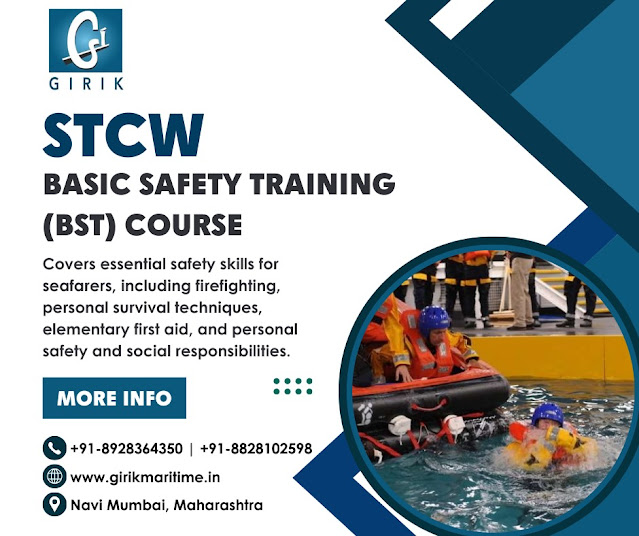
Basic safety training introduces learners to fundamental safety practices required in the maritime environment. It can cover areas such as personal survival, fire prevention, firefighting, elementary first aid, and personal safety and social responsibilities.
The objective is to help learners understand how to protect themselves and support others during emergencies on board.
Fire Prevention and Fire Fighting
Fire is one of the serious emergencies that can occur on a vessel. Firefighting training introduces seafarers to fire prevention principles, firefighting equipment, emergency response, and safe procedures for dealing with fire-related situations.
Practical training can help learners become familiar with the actions required during an emergency.
Personal Survival Techniques course
The Personal Survival Techniques course focuses on what a seafarer should know when facing an emergency that requires abandoning a vessel or surviving in the water. It helps participants understand survival procedures, life-saving appliances, emergency equipment, life rafts, immersion suits, and rescue techniques needed during critical situations at sea.
Learners can develop awareness of survival equipment, life-saving appliances, emergency procedures, life rafts, immersion suits, and rescue techniques.
Personal Safety and Social Responsibilities
Life on a ship involves living and working closely with other crew members. Personal safety and social responsibility training helps learners understand safe working methods, communication, fatigue management, shipboard relationships, emergency procedures, and responsibilities related to marine pollution prevention.
These skills are important for maintaining a safe and cooperative working environment.
Elementary First Aid
Medical assistance may not always be immediately available at sea. Elementary first aid training introduces seafarers to basic lifesaving principles and appropriate responses to common injuries and medical emergencies.
Training can include subjects such as bleeding, burns, fractures, electric shock, hypothermia, bandaging, and safe handling of injured persons.
Specialized Maritime Training
In addition to essential safety training, maritime professionals may require specialized courses depending on their duties and the type of vessel on which they work.
Girik Maritime Academy also conducts courses such as Basic Oil and Chemical Tanker Cargo Operations and Passenger Ship Familiarization.
Oil and Chemical Tanker Training
Tanker operations require awareness of cargo characteristics, hazards, safety procedures, firefighting, emergency response, and pollution prevention.
Training in basic oil and chemical tanker cargo operations can introduce learners to the physical and chemical properties of cargo, hazard identification, risk assessment, cargo operations, and emergency procedures.
Shipboard case studies involving oil and NLS emergencies can further help learners understand how safety knowledge applies to real operational situations.
Passenger Ship Familiarization
Passenger ships have specific operational and safety considerations because crew members may need to assist passengers during routine operations and emergencies.
Passenger ship familiarization training can cover emergency organization, alarm systems, muster stations, communication, emergency drills, passenger safety, ship operations, stability, cargo securing, and dangerous cargo areas.
Why Practical Training Matters
One of the biggest differences between simply reading about maritime safety and actually learning through practical exercises is application.
At Girik Maritime Academy, practical learning and shipboard case studies form an important part of the training approach. Learners can connect classroom concepts with situations that may occur during actual ship operations.
This approach can help develop:
- Better safety awareness
- Practical decision-making skills
- Emergency preparedness
- Confidence in following procedures
- Understanding of shipboard responsibilities
- Team communication
Training Facilities and Learning Environment
A suitable training environment can make a difference in how effectively students understand practical maritime procedures.
Girik Maritime Academy conducts practical sessions at a dedicated workshop, providing learners with opportunities to engage with practical aspects of maritime training.
The combination of classroom instruction, practical activities, experienced trainers, and maritime case studies is intended to give students a more complete understanding of their training subjects.
Who Can Benefit from an STCW Course?
STCW training is relevant to individuals who are preparing to work as seafarers as well as maritime professionals who require specific training for their duties.
It can be particularly useful for:
- Aspiring merchant navy candidates
- New seafarers preparing for their first assignment
- Ratings and other shipboard personnel
- Seafarers requiring safety-related training
- Professionals seeking specialized maritime courses
The exact training requirements can depend on the individual’s role, vessel type, certification requirements, and applicable regulations. Candidates should confirm their specific course and certification requirements before enrollment.
How to Choose a Maritime Training Academy
Choosing a training centre is an important decision for anyone planning a maritime career. Before enrolling, students should consider several practical factors.
Check Course Approval and Certification
Always verify whether the course and training provider meet the applicable Directorate General of Shipping requirements and whether the certification is appropriate for your intended role.
Consider Practical Training
Look for training that provides opportunities to understand practical procedures rather than relying entirely on classroom theory.
Learn From Experienced Trainers
Experienced maritime instructors can provide useful insights into shipboard operations and help students connect training concepts with real situations.
Review Course Content
Understand exactly what is included in the course before enrollment. Check the duration, eligibility, training modules, practical sessions, documentation requirements, and certification details.
Choose Training That Matches Your Career Goals
Different vessels and job responsibilities may require different types of training. Understanding your intended career path can help you select relevant courses.
Why Choose Girik Maritime Academy?
Girik Maritime Academy focuses on developing maritime knowledge that can be applied to real shipboard situations. The academy’s training approach combines professional instruction, practical skill development, specialized courses, and shipboard case studies.
Students can explore courses covering basic safety, fire prevention and firefighting, personal survival, personal safety and social responsibilities, elementary first aid, tanker operations, and passenger ship familiarization.
The academy’s focus on Indian seafarers also supports its goal of providing accessible and relevant maritime education for people preparing to work in the global maritime industry.
Preparing for Your Maritime Career
Completing appropriate maritime training is an important step, but a successful career at sea also requires discipline, continuous learning, teamwork, physical preparedness, and a strong commitment to safety.
As a learner, take your training seriously. Ask questions, participate actively in practical sessions, understand emergency procedures, and try to connect every lesson with its real application on board.
The skills developed during training can become part of your professional foundation as you progress through your maritime career.
Conclusion
An STCW Course provides important safety and emergency training for people preparing to work in the maritime industry. DG approved STCW course cover essential areas such as personal survival, firefighting, first aid, communication, and social responsibilities. The knowledge gained through structured maritime training helps seafarers understand their responsibilities on board, respond effectively during emergencies, and develop the practical skills required for a safer working environment at sea.
Girik Maritime Academy offers professional maritime training with a focus on practical learning, experienced instruction, and shipboard case studies. Whether you are beginning your maritime journey or looking for specialized training, selecting the right course and understanding its requirements are important steps toward professional development.
For course information, eligibility, schedules, and admissions, contact Girik Maritime Academy at +91–8928364350 / +91–8828102598.
Frequently Asked Questions
1. What does STCW stand for?
STCW stands for Standards of Training, Certification and Watchkeeping for Seafarers. It establishes international standards relating to seafarer training, certification, and watchkeeping.
2. What is covered in basic STCW safety training?
Basic safety training can cover areas such as personal survival techniques, fire prevention and firefighting, elementary first aid, personal safety, and social responsibilities. Specific course requirements depend on the applicable regulations and the seafarer’s role.
3. Why is practical training important for seafarers?
Practical training allows learners to apply classroom knowledge to realistic maritime situations. It can help improve familiarity with safety equipment, emergency procedures, communication, and appropriate responses during onboard emergencies.
4. Where can I get more information about STCW training?
You can contact Girik Maritime Academy to ask about available courses, eligibility, schedules, certification, and admission requirements. Call +91–8928364350 / +91–8828102598 for further information.


Comments
Post a Comment